
Minimally Invasive Cardiac Surgery (MICS): Is It Right For You?
Traditional heart surgery requires a midline sternotomy (opening the breastbone). Minimally invasive approaches achieve the same surgical precision through small 5–7 cm side incisions without bone splitting.
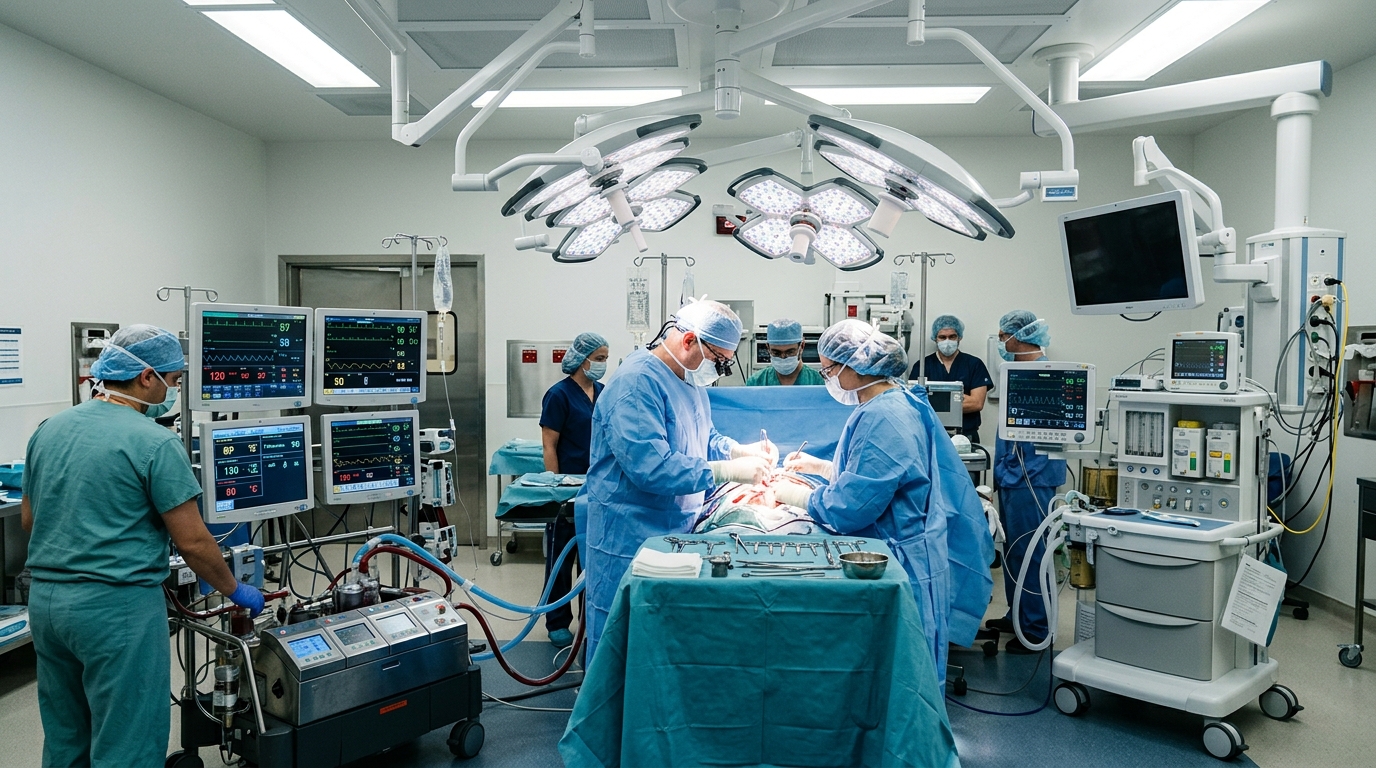
Key Advantages of Keyhole Heart Surgery
MICS represents one of the biggest leaps forward in modern cardiothoracic surgery:
- No Bone Splitting: Preserves the integrity of the breastbone, eliminating sternal non-union risks.
- Minimal Blood Loss: Significantly lower requirement for blood transfusions.
- Faster Recovery: Hospital discharge typically in 3 to 5 days, with resumption of normal activities in 2 to 3 weeks.
- Cosmetically Superior: Discreet incision hidden under the pectoral crease or breast line.
Procedures Performed via MICS
Minimally invasive techniques are routinely utilized for Single-vessel and Multi-vessel CABG (MICS-CABG), Mitral and Aortic valve repairs/replacements, and ASD closure for suitable anatomical candidates.
"Patient selection is vital. We review high-resolution CT angiograms to verify arterial access and chest wall anatomy before confirming suitability for keyhole surgery."
Clinical Notice: This article is published for educational guidance only and does not substitute professional in-person cardiac examination. Consult Dr. Aditya for individual treatment plans.
Need Advice On This Condition?
Book an OPD appointment with Dr. Kumar Aditya for evaluation or a surgical second opinion.
OPD Clinic: Lifecare Clinic, Patna
Hospital: Assistant Director CTVS, IGIC